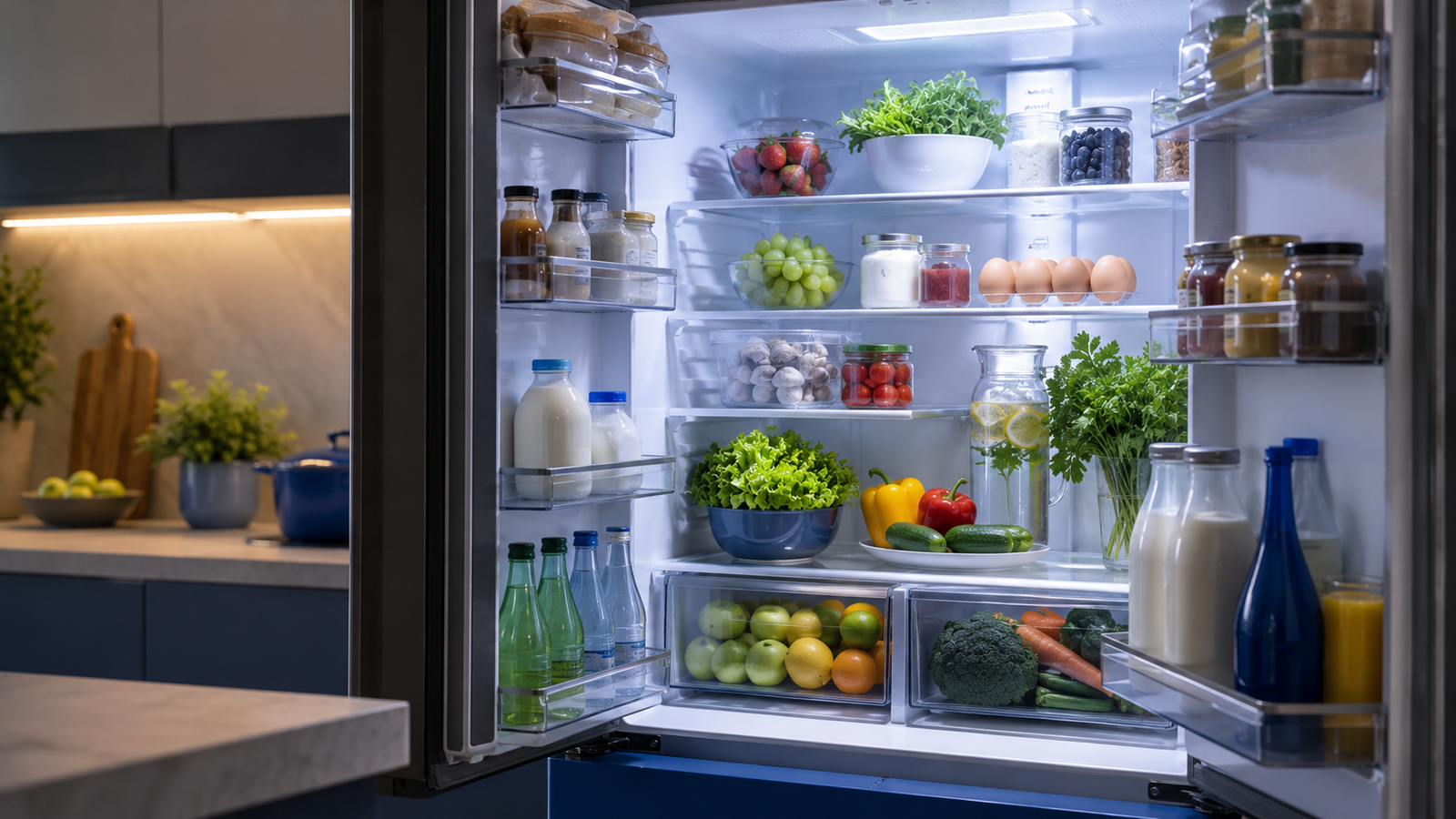
A spell of warm weather puts your fridge and freezer under real pressure: warmer kitchens, more frequent door-opening and bags of barbecue food all make them work harder to keep things safe. A few simple habits keep your food fresher for longer, cut waste and take the strain off the appliance. Here's how to keep everything cool when the temperature climbs.
Get the temperature right
This is the single most important step. Food-safety guidance is to keep your fridge at or below 5°C and your freezer at −18°C. Many fridges only show a 1–5 dial rather than a temperature, so it's worth checking with an inexpensive fridge thermometer — especially in hot weather, when the default setting may not be cold enough.
Everyday habits that help
- Keep the door closed: every time it opens, warm air rushes in. Decide what you want before you open it, and close it promptly.
- Let hot food cool first: putting steaming leftovers straight in warms everything around them — cool food quickly, then refrigerate within two hours.
- Don't overfill — or underfill: air needs to circulate, so avoid cramming the shelves; but a well-stocked freezer holds its cold better than an empty one.
- Mind the shelves: raw meat goes on the bottom shelf so it can't drip, dairy and cooked food higher up, and salad in the crisper drawer.
- Check the door seal: if a sheet of paper slips out easily when closed in the door, the seal may be letting cold escape.
Make the most of your freezer
Your freezer is your best friend in a heatwave. Batch-cool and freeze anything you won't use in time, freeze bread and milk to free up fridge space, and keep ice packs ready for picnics and cool-boxes. If the freezer is struggling to hold −18°C, give the coils at the back room to breathe and keep it out of direct sun.
When it might be time to upgrade
If your fridge can't hold temperature on a warm day, ices up constantly or never seems cold enough, it may be past its best. A modern frost-free, energy-efficient model holds a steadier temperature and costs far less to run. Browse fridge freezers and the wider refrigeration range, or add a separate freezer for extra summer storage.
Quick checklist
- ☐ Fridge at or below 5°C
- ☐ Freezer at −18°C
- ☐ Door kept closed; food cooled before storing
- ☐ Shelves not overpacked; raw meat on the bottom
- ☐ Seal intact; appliance out of direct sun
Final thoughts
Most food-waste headaches in summer come down to temperature and door discipline. Set it right, keep it closed and lean on your freezer — and your food (and your electricity bill) will thank you.
Think your fridge isn't keeping up? The team in any of our 60+ stores can help you find a cooler, more efficient replacement — or browse refrigeration online.